
Review Campaigns in the OMR Manager
Create trackable review campaigns in OMR Manager with custom duration, incentives, and budget limits to measure published reviews per channel
Create trackable campaigns to collect reviews for your OMR Reviews profile.
Learn how to create links for your review campaigns in the OMR Manager. Set the campaign duration, incentives, and limits, and see at any time how many published reviews each campaign has generated and how much of your budget has already been spent.
This article covers the following topics 👇
-
How do review campaigns work?
-
How to set up a review campaign
-
The campaign overview
-
Campaign details
-
Best practices
How do review campaigns work?
The foundation of a review campaign is a dedicated, trackable invitation link created for a specific purpose or channel, such as a newsletter, QBR, or onboarding email. You set the duration, incentive (Amazon or Wunschgutschein gift card), value, and limits (budget, number of published reviews, and time period). All results and the reviews you collect are reported for each campaign.
The goal is to collect more high-quality reviews for your OMR Reviews profile, with clear attribution for each activity or channel.
-
🔗 Clear attribution: Each link is assigned to a campaign. You can see how many published reviews each channel generates.
-
🎁 Incentives when you need them: Amazon or Wunschgutschein gift cards in any amount, with a budget or quantity limit.
-
📆 Control over scheduling and duration: Run time-limited campaigns, such as for a launch, event, or quarter-end, or campaigns with no end date.
-
📊 Transparent reporting: Budget (spent/remaining) and reviews received are shown for each campaign. You can measure the success of each campaign individually.
-
⚙️ Easy to automate: Add links to marketing automations and CS processes, such as email footers or NPS flows.
Typical use cases:
-
Campaigns for each email sequence
-
In-app nudges
-
Webinar follow-ups
-
CS footers
-
ABM outreach, and more
How to set up a review campaign
Step 1: Go to the campaign section
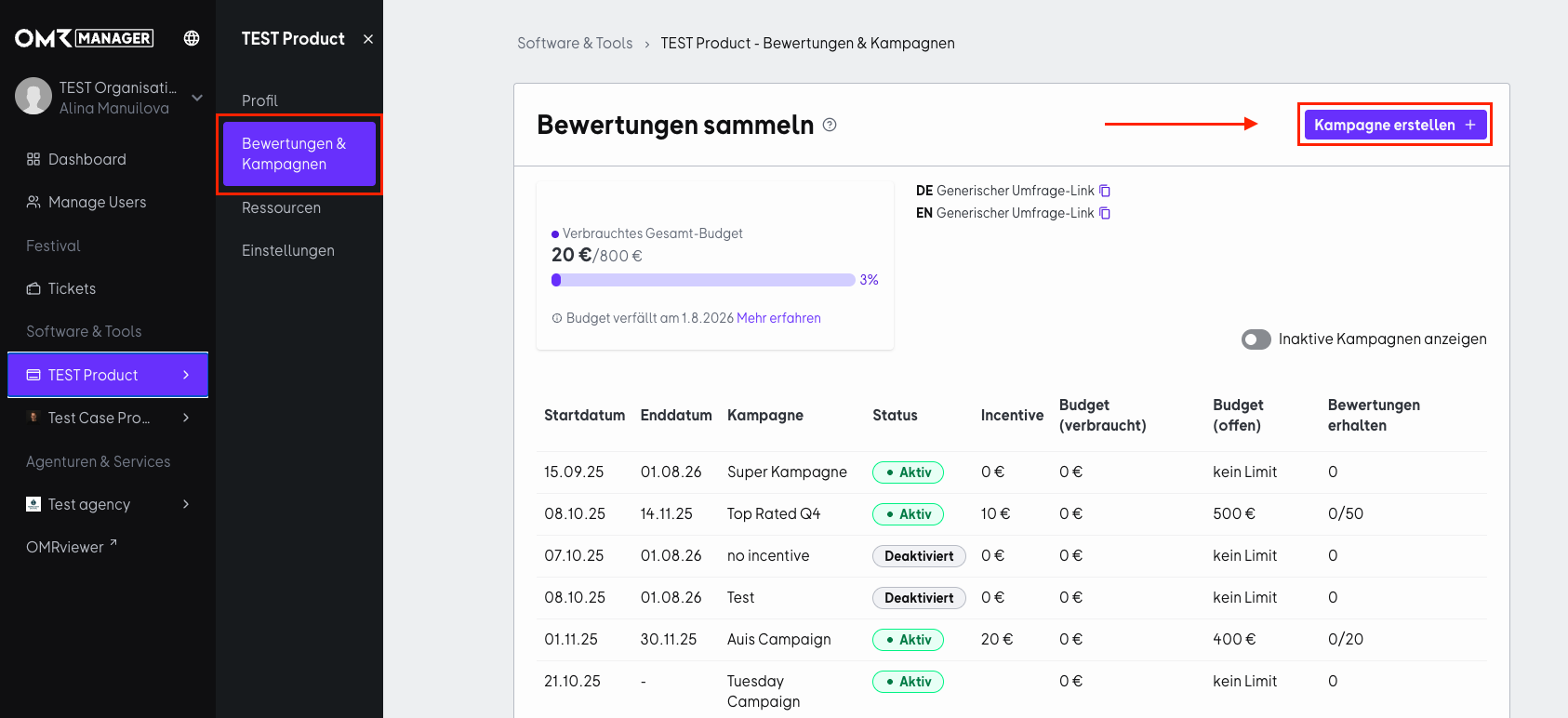
In the OMR Manager sidebar, go to Software & Tools → [Dein Produkt] → Bewertungen & Kampagnen and click „Neue Kampagne erstellen“ in the top right.
Step 2: Enter the campaign details
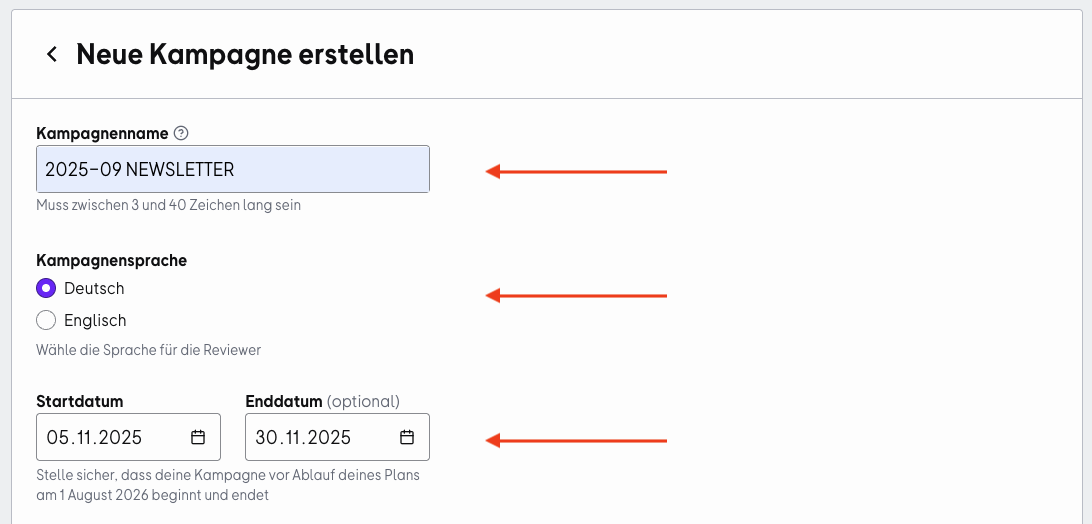
Enter a name (visible internally) and select the campaign language for reviewers.
Set a start date and, optionally, an end date.
Tips:
-
Use consistent naming conventions, such as
YYYY-MM Channel Region. -
The Marketing-Kanal field is for internal attribution, making it ideal for reports and team transparency.
Step 3: Choose an incentive
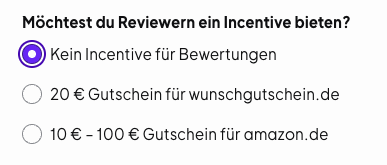
Under „Möchtest du Reviewern ein Incentive bieten?“, decide whether to offer reviewers an incentive, such as an Amazon or Wunschgutschein gift card, or no incentive for reviews.
Don’t use incentives in social media posts or paid ads
-
For organic posts and paid ads, we recommend not using incentivized survey links.
-
An incentivized link can reach a lot of people, but it is less targeted and may also reach people who don’t use your product.
-
This can reduce the quality of the reviews submitted.
-
Incentivized campaigns in paid ads can give the impression that reviews are influenced or paid for.
Under „Incentive“, select the type and value:
-
Amazon gift cards: The following values are available: €10, €15, €20, €25 (recommended), €30, €40, €50, €75, and €100
-
Wunschgutschein gift cards: A fixed value of €20 is available
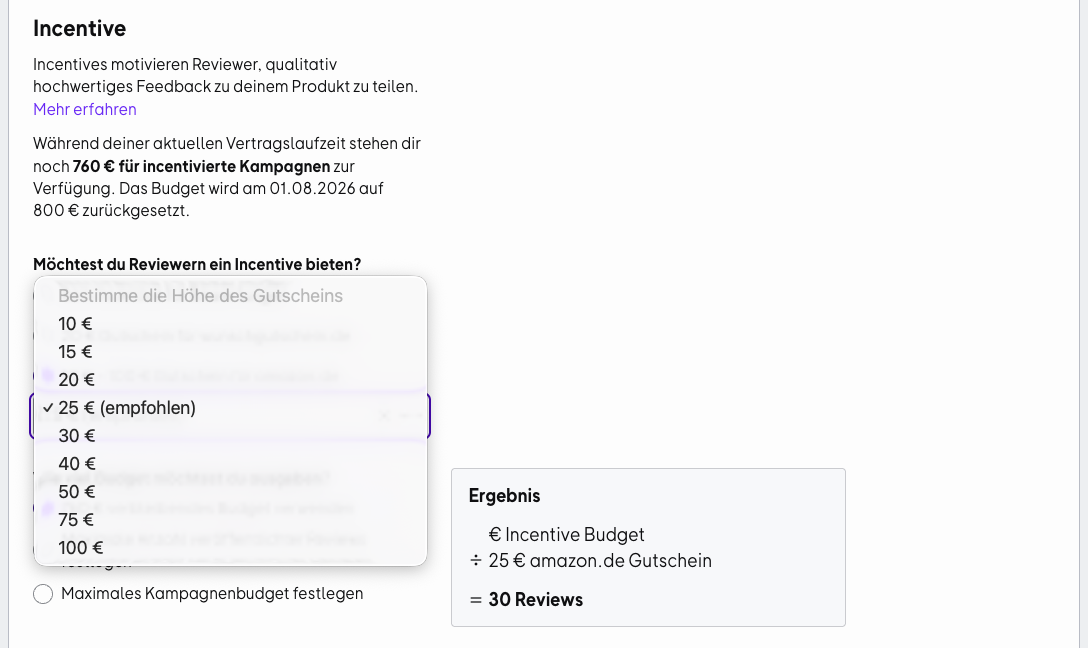
Monetary incentives increase the perceived imbalance, which can lead to reviewers making more effort and writing more detailed reviews. However, you shouldn’t set the gift card value too high. We recommend an amount between €20 and €30 to appropriately recognize the reviewer’s time and effort.
Step 4: Set a limit
Choose how to limit the campaign:
-
Use Verbleibendes Budget verwenden (the campaign runs until your budget is used up),
-
Set the Maximale Anzahl veröffentlichter Bewertungen, for example, a maximum of 50, or
-
Set a Maximales Kampagnenbudget, for example, €200

What you’ll see later: In the campaign list, you’ll see the Budget (verbraucht/offen), Alle Bewertungen (the total number of reviews in this campaign), and Bewertungen erhalten (incentivized reviews, such as 32/50).
Step 5: Personalize your message
Write a personalization message of up to 250 characters to display on the review landing page.
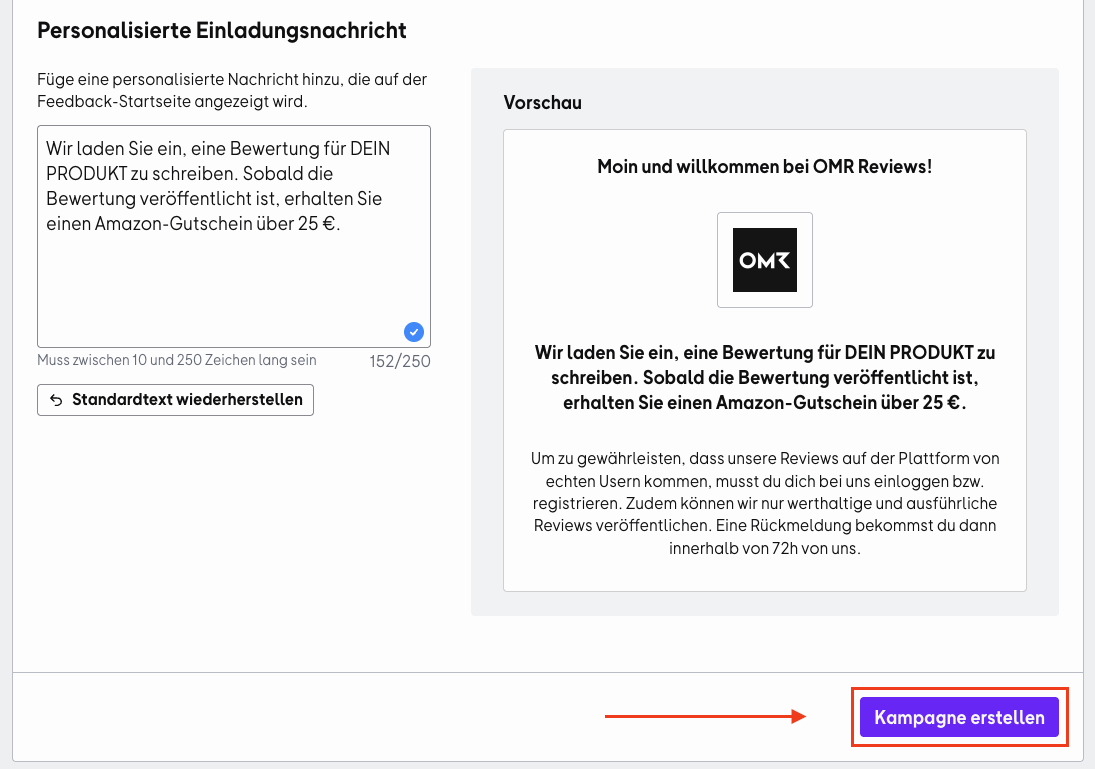
Click „Kampagne erstellen“. Your campaign-specific link will then be ready and appear in your review campaign overview.
Use the link in email sequences, QBR decks, in-app notifications, social media posts, or email footers for your CS or support team. Every use of the link remains uniquely trackable through the campaign.
👉 Learn more about sharing survey links
Personalized review links at the employee level
When several employees are actively collecting reviews, a common question is:
👉 How can you effectively track results at the team or individual level?
You have two options:
Option 1: One review campaign with personalized links
Create one central campaign and generate individual links for each employee within it.
Ideal if:
-
You want to monitor the overall performance of a team
-
Consistent communication is important
-
Employees should collect reviews during the same period
You can still personalize the messaging within the shared campaign, for example, in the invitation text.
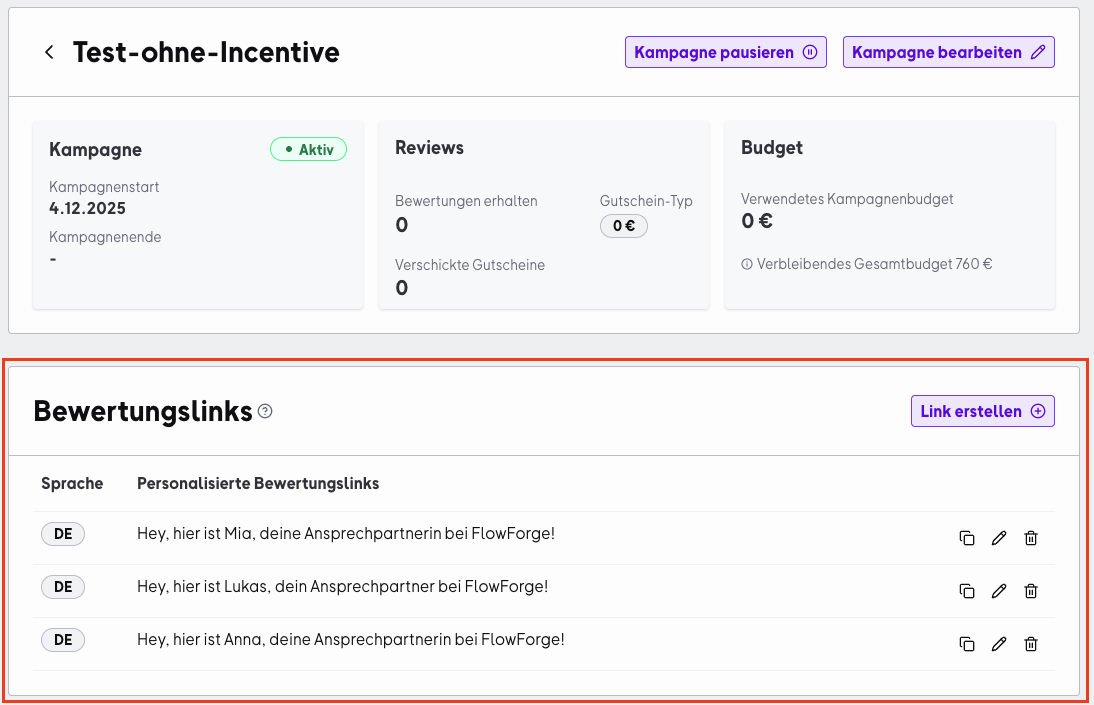
Option 2: A separate campaign for each employee
Create a separate review campaign for each person.
Ideal if:
-
The focus is on measuring individual performance
-
You want to see exactly who generated which reviews
-
Employees need flexibility, for example, to pause or start at different times
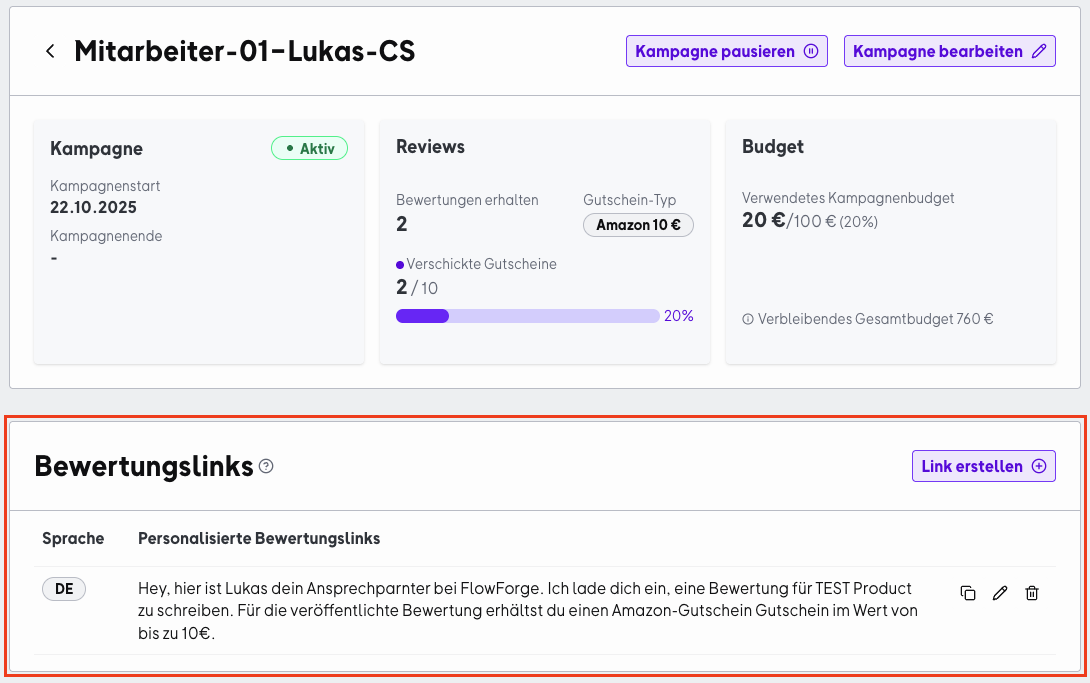
One important operational difference is that campaigns and their associated links always have the same duration. So, if all employees should collect reviews during the same period, a shared campaign is recommended. Separate campaigns are a better fit if you need more flexibility, for example, to let individuals pause their campaigns.
Campaign overview
This screen is the central overview of all your ongoing review campaigns. It gives you a quick answer to these questions:
-
Which campaigns are currently running?
-
What incentive has been selected?
-
How much of the budget has been used?
-
How many reviews have been collected so far?
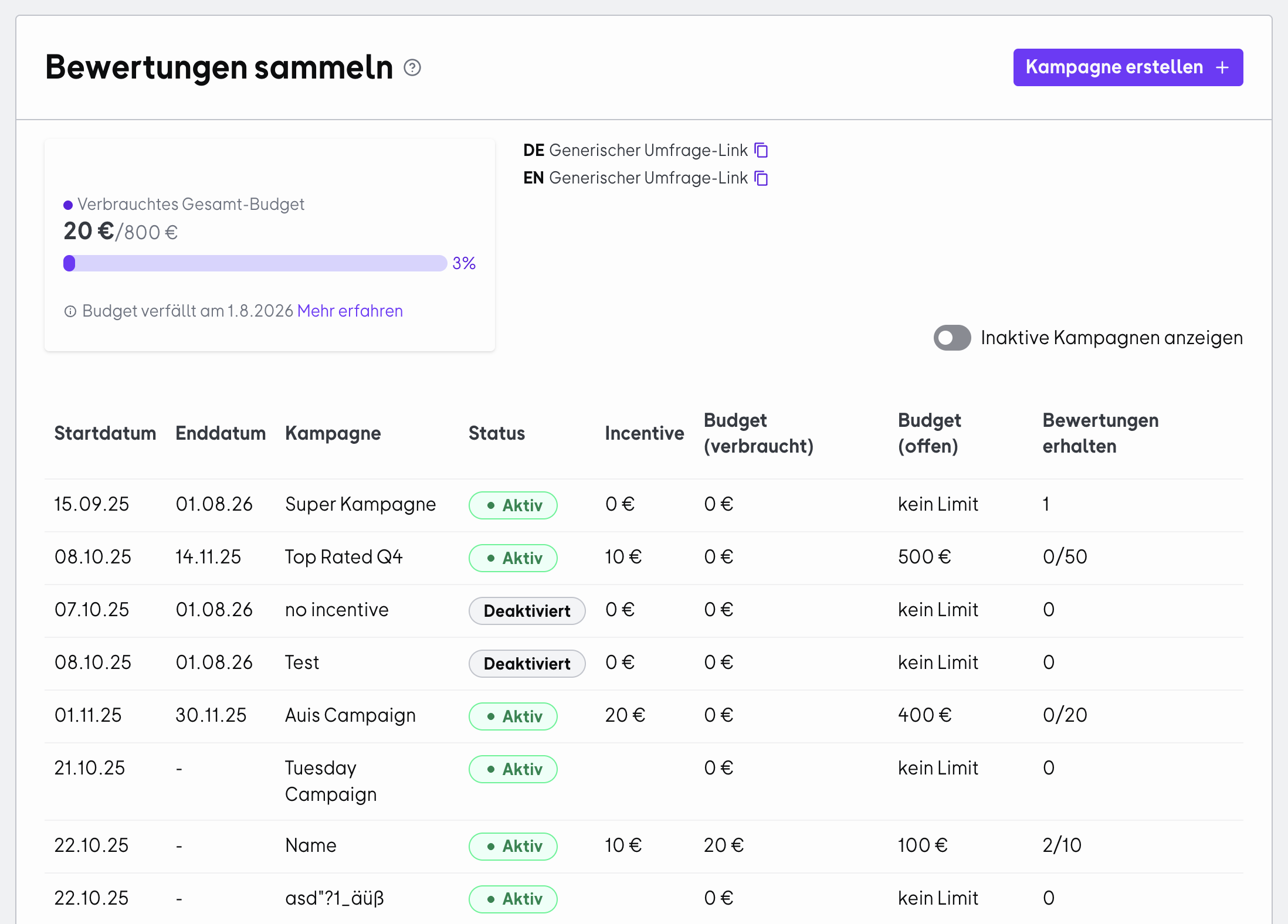
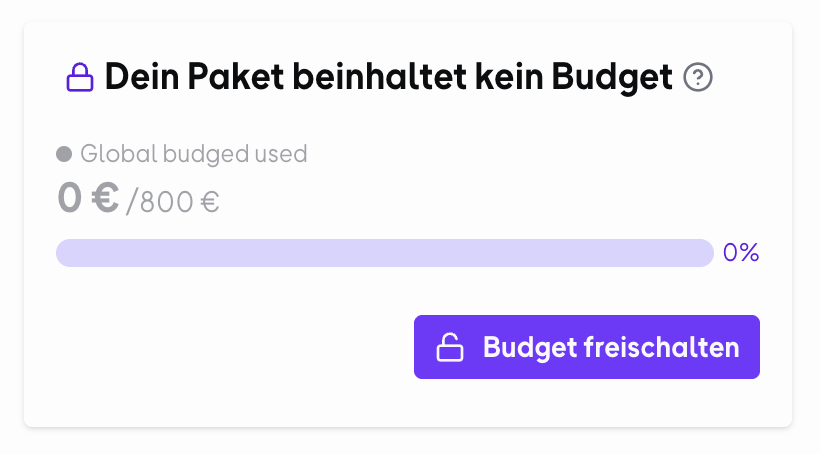
1. Budget box (top left)
-
Shows whether your current plan includes a budget for incentives.
-
A progress indicator (e.g. €0 / €800) shows how much has been used.
Learn more about "Budget für Bewertungen"
2. Generic survey links (top right)
You can use generic survey links flexibly in emails, on landing pages, or in other communications. They’re particularly useful when you want to share a general request for reviews.
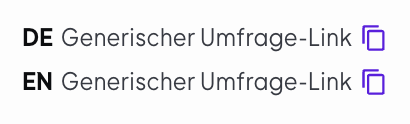
Reviews submitted through generic links follow the same logic as organic reviews. This means that you can’t track individual reviews in detail in OMR Manager. In this case, OMR Manager only displays the status „Veröffentlicht“.
This means:
- You can’t track incoming reviews through generic links in as much detail as you can with a review campaign.
- You don’t have a reliable overview of incoming reviews in OMR Manager.
- Automated reminders aren’t available for generic links.
Always create a review campaign in OMR Manager for your review requests, whether or not they include an incentive.
This gives you better tracking in the tool and lets you automate reminders as needed.
Generic survey links are therefore best suited to simple requests sent to a broad audience. If you want to manage review requests in a structured way, track them more effectively, and analyze them in OMR Manager, a review campaign is the recommended standard.
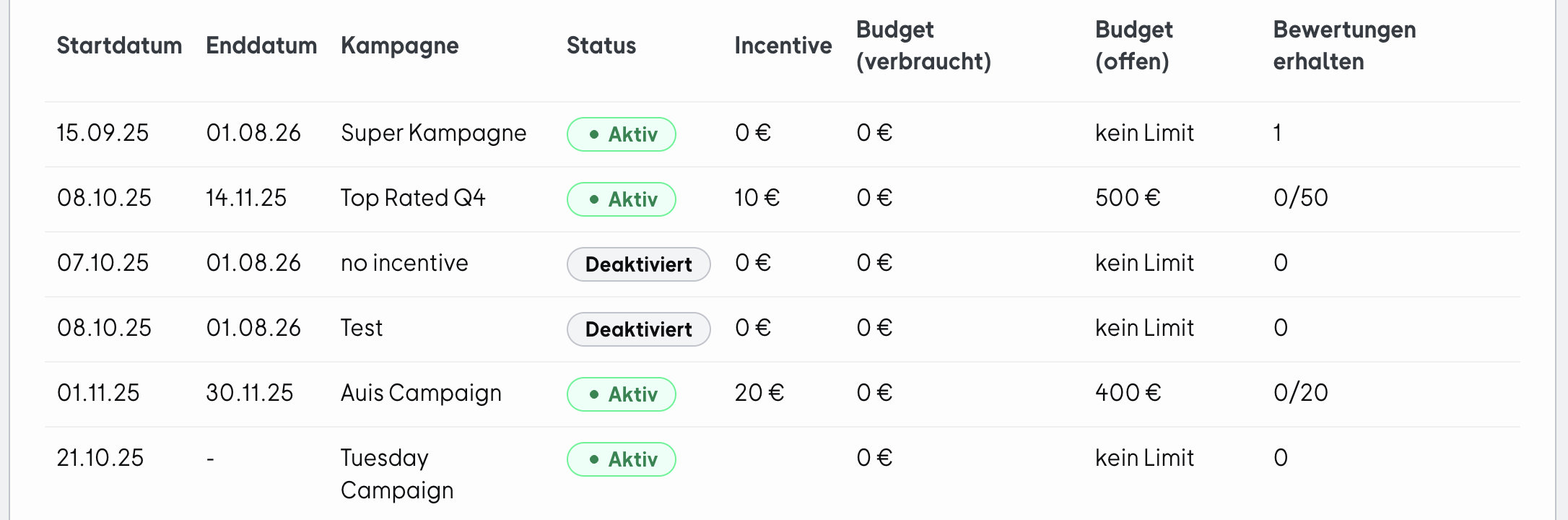
3. Campaign table
Shows all active and scheduled campaigns with the following columns:
-
Startdatum / Enddatum → Campaign period
-
Kampagne → Campaign name
-
Status → Aktiv, Pending, or Deaktiviert
-
Incentive → Incentive amount per review (e.g. €20)
-
Budget (verbraucht) → Budget paid out so far
-
Budget (offen) → Budget still available for this campaign
-
Bewertungen erhalten → Number of incentivized reviews received compared with the target (e.g. 0/15,000)
-
Alle Bewertungen → Total number of reviews attributed to the campaign, whether or not they included an incentive
Why the numbers may differ: The „Bewertungen erhalten“ column only includes incentivized reviews, as it reflects the campaign target and budget used. The „Alle Bewertungen“ column, on the other hand, shows the total number of reviews received through the campaign. This is the same number you’ll find in the campaign details.
4. Filter option
- Use the „Inaktive Kampagnen anzeigen“ toggle to display completed or stopped campaigns as well.
Below the campaign overview, you’ll find an overview of all the reviews you’ve collected.
👉 Learn more about "Mit Bewertungen interagieren"
Campaign details
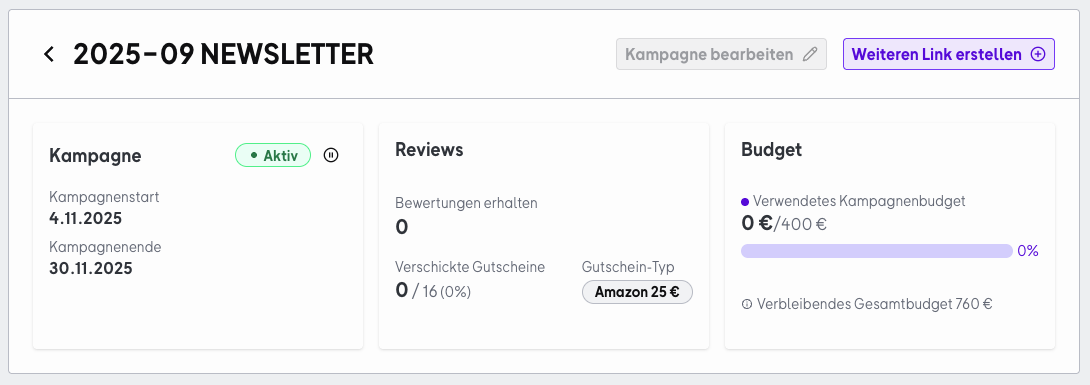
This view shows all the information and results for an individual campaign, such as “2025-09 NEWSLETTER”. This page is the central hub for a single campaign.
It shows:
-
Status: Aktiv, Inaktiv, Ausstehend, or Deaktiviert
-
Kampagnenstart & Kampagnenende: The period during which the campaign runs
-
Bewertungen erhalten: Number of reviews received through this campaign so far
-
Verschickte Gutscheine: Shows how many vouchers have been sent compared with the maximum possible number (e.g. 0/8).
-
Verwendetes Kampagnenbudget: Progress bar showing the amount used and the limit (e.g. €0/€200).
-
Verbleibendes Gesamtbudget: Displays any budget that’s still available.
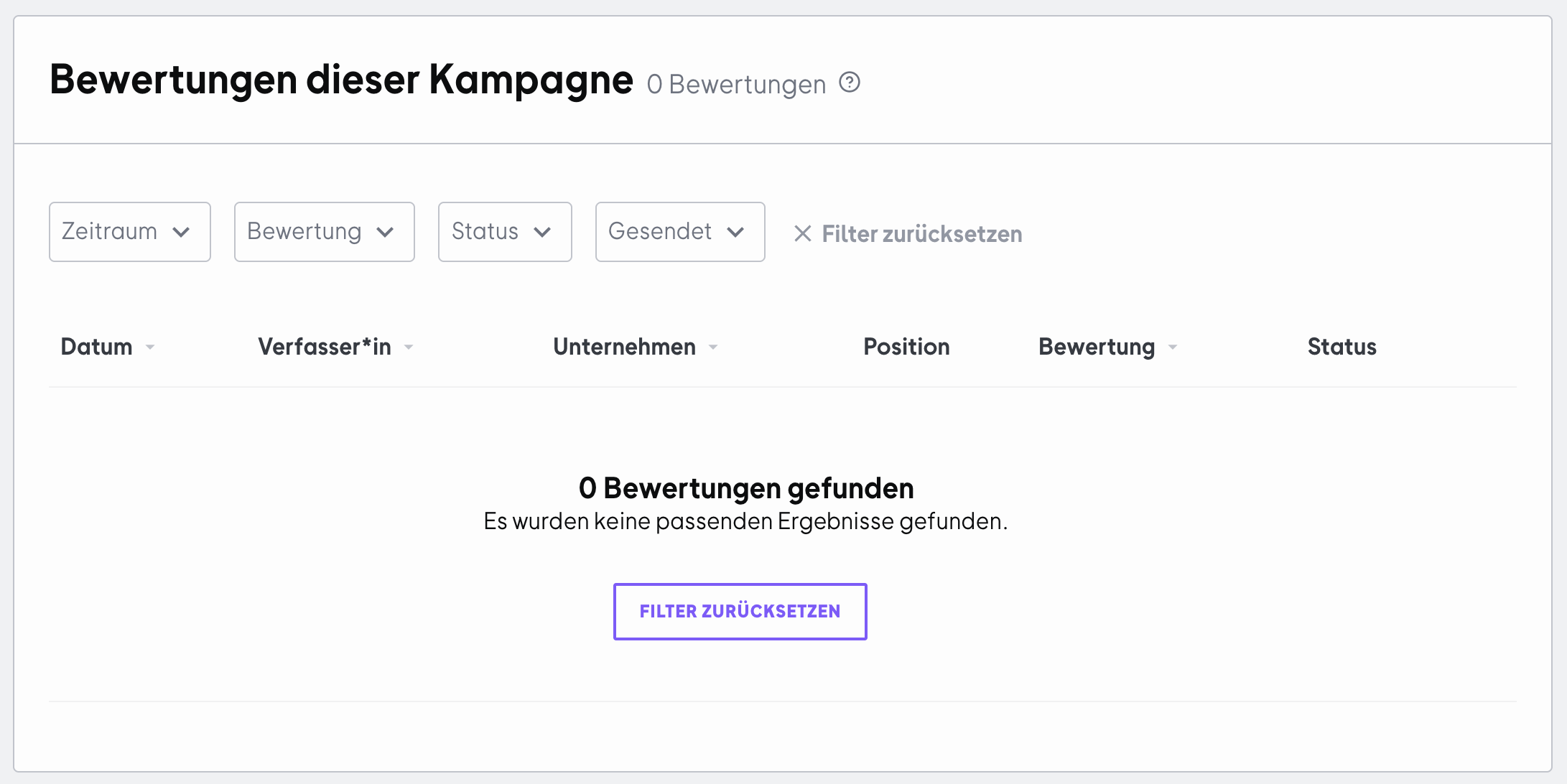
Under “Bewertungen für diese Kampagne”, you’ll find all the reviews received through this campaign. From there, you can reply to reviews and send reminders to people who haven’t submitted a review yet.
OMR Reviews automatically sends vouchers and deducts them from the selected allocation only after a review has been published.
Best practices
Channel benchmarking
-
Problem: You’re not sure which touchpoints generate the most reviews.
-
Approach: Create a separate campaign for each channel (newsletter, in-app, QBR). Include the relevant channel in the campaign name.
-
Result: You can see at a glance which channel has the best conversion rate and allocate your budget accordingly.
Incentive optimization
-
Problem: Low conversion despite outreach.
-
Approach: Create two campaigns in parallel (e.g. Amazon €20 vs. choice of reward €20). Use the same target audience and campaign duration.
-
Result: You’ll see which type of incentive converts better and can standardize the amount
 Powered by happysupport.ai