
Best Practice: From Intent Signal to LinkedIn Campaign
Build LinkedIn ABM campaigns using OMRviewer intent data synced to HubSpot or Campaign Manager to target high-intent accounts efficiently
How to build a LinkedIn ABM campaign from OMRviewer data, step by step, either through HubSpot or directly in the LinkedIn Campaign Manager
A CRM provider generated 249 leads using this approach. Their cost per lead came in 50 percent below the LinkedIn B2B benchmark. Instead of casting a wide net, this company targeted only accounts that were actively searching for a solution on OMR Reviews. This article walks you through the setup click by click, from matched audience to your first running campaign.
Prerequisite: You have OMRviewer data in your CRM or enrichment tool.
If not, start here: 👉 Best Practice: Integrating OMRviewer Data into Your Tool Stack
What you'll find in this article 👇
-
The ABM workflow at a glance
-
Two ways to build a matched audience
-
Option A: Syncing your audience from HubSpot to LinkedIn
-
Option B: Uploading directly in the LinkedIn Campaign Manager
-
Setting up your campaign in LinkedIn and deploying your audience
-
Which creative formats work
-
Frequency capping: what you can actually control
-
Landing page best practices
-
What this workflow actually delivers
The ABM workflow at a glance
Before we dive into the step-by-step instructions, here's the complete workflow. Seven steps from anonymous site visit to incoming lead:
- A company visits your profile or a category page on OMR Reviews.
- OMR Reviews decodes the anonymous IP address and identifies the company.
- The company list flows into your CRM (HubSpot, Salesforce, Pipedrive) or an enrichment tool like Clay. Exactly how is covered in the integration article.
- You match the visitors against your ABM target account list and qualify them.
- From the qualified accounts, you build a Custom Audience on LinkedIn, either through HubSpot or directly in the Campaign Manager.
- You run campaigns targeted at exactly this audience.
- Interested people land on a dedicated landing page, not your homepage.
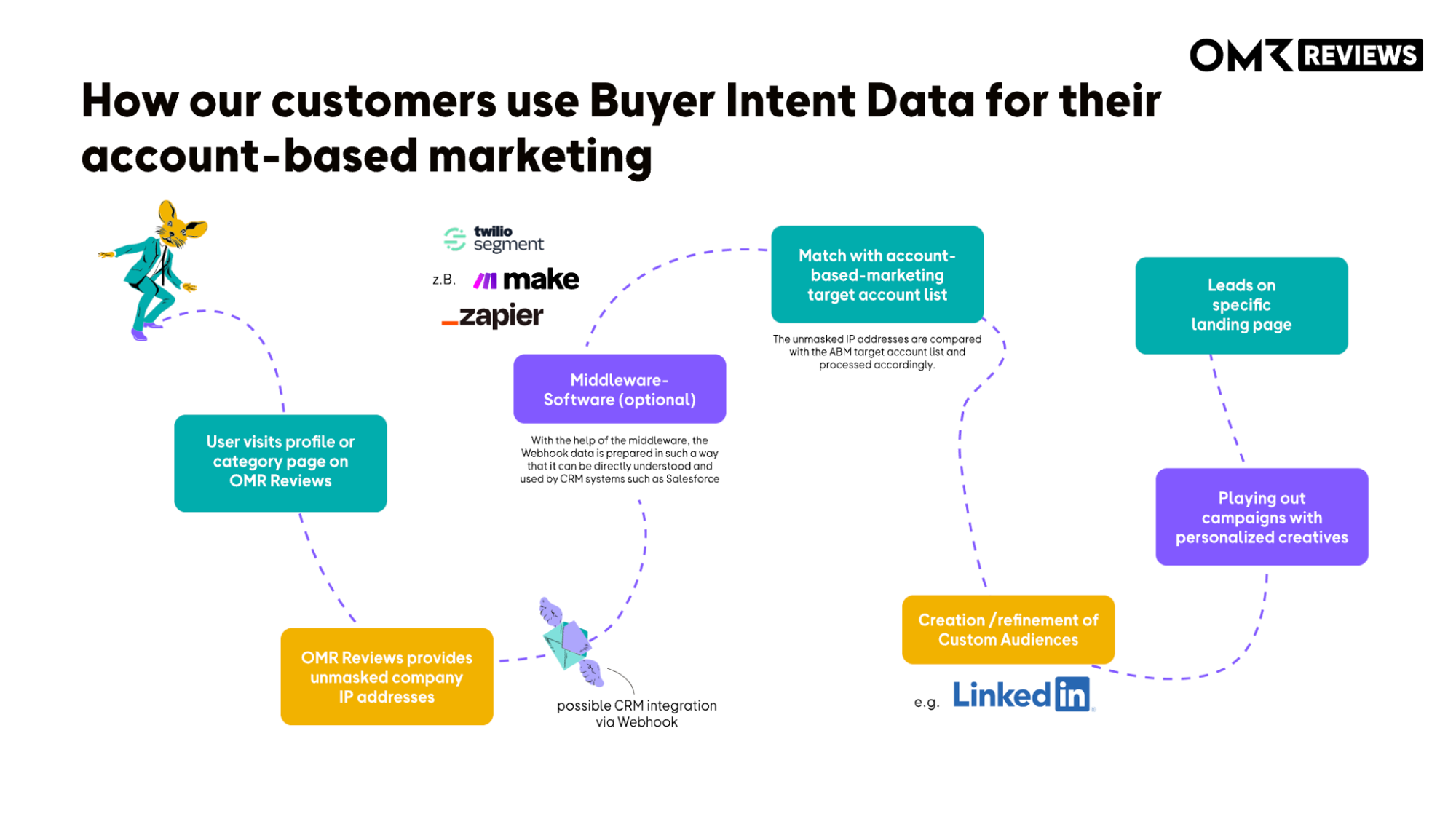
Complete ABM workflow from OMR Reviews profile page to LinkedIn campaign.
👉 Learn more about "Target account lists in OMRviewer"
Two ways to build a matched audience
A matched audience is a list you upload containing companies or people that LinkedIn matches internally against its member pool. This audience then drives your targeting.
You have two ways to build a matched audience from OMRviewer data:
- Option A: HubSpot to LinkedIn sync. If you use HubSpot as your CRM, you manage the list in HubSpot and sync it automatically to LinkedIn. The list stays dynamic, with new visitors flowing in continuously.
- Option B: Direct CSV upload in the Campaign Manager. If your data lives in Clay or another tool, you export a CSV and upload it manually to LinkedIn. The list is static, and every update requires a new upload.
Recommendation: Option A if HubSpot is your central CRM (less maintenance, automatic updates). Option B for quick tests or if you're working outside of HubSpot.
Option A: Syncing your audience from HubSpot to LinkedIn
Prerequisites:
- LinkedIn Ads account with access to Campaign Manager and permission to manage matched audiences.
- HubSpot tier: Marketing Hub Starter, Professional, or Enterprise.
- You're a HubSpot Super Admin or have Ads Access permission.
Step 1: Create a segment
Click on CRM > Segments (Lists) to create a new list at the company level that serves as the foundation for your ABM campaign.
When creating it, search for OMRviewer and select the appropriate filter for your use case.
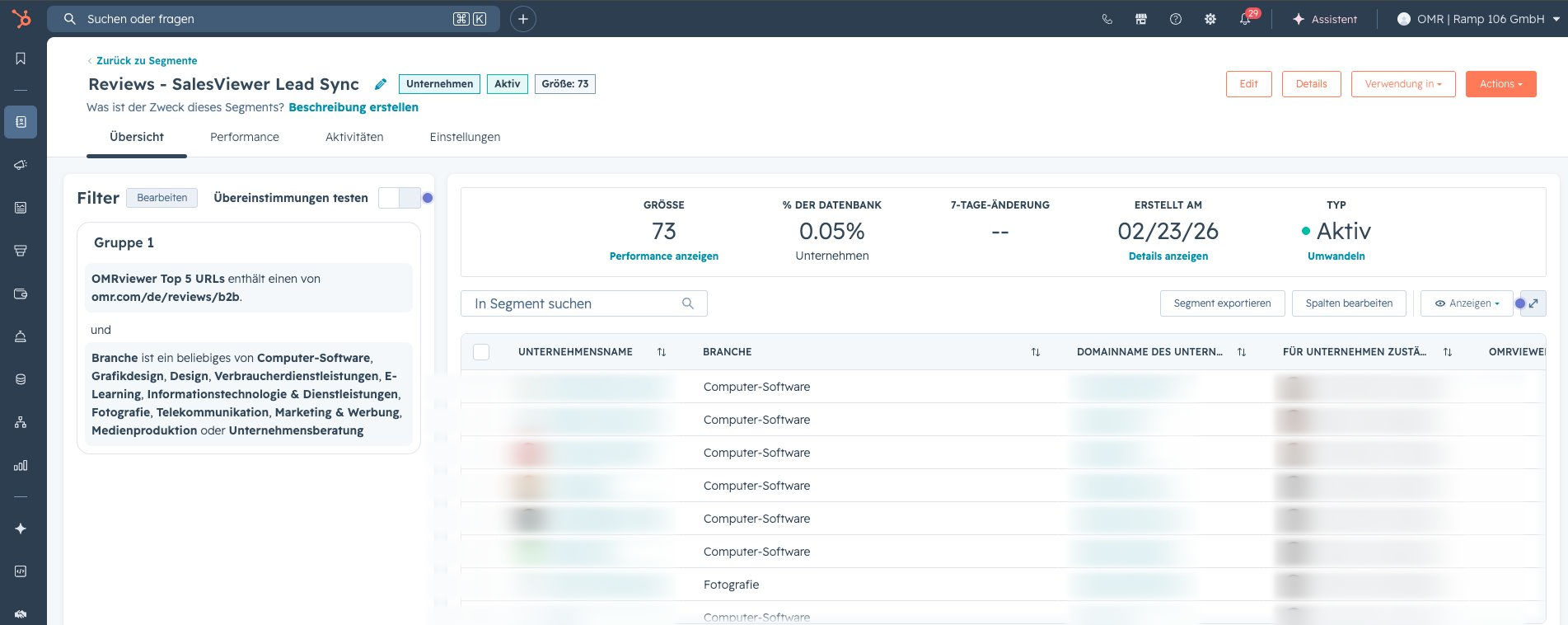
Step 2: Create an audience and link it with LinkedIn
Navigate in HubSpot to Marketing > Ads > Audiences. Click Create in the top right and select Audience.
Select Company Segment here, as this targets complete accounts.
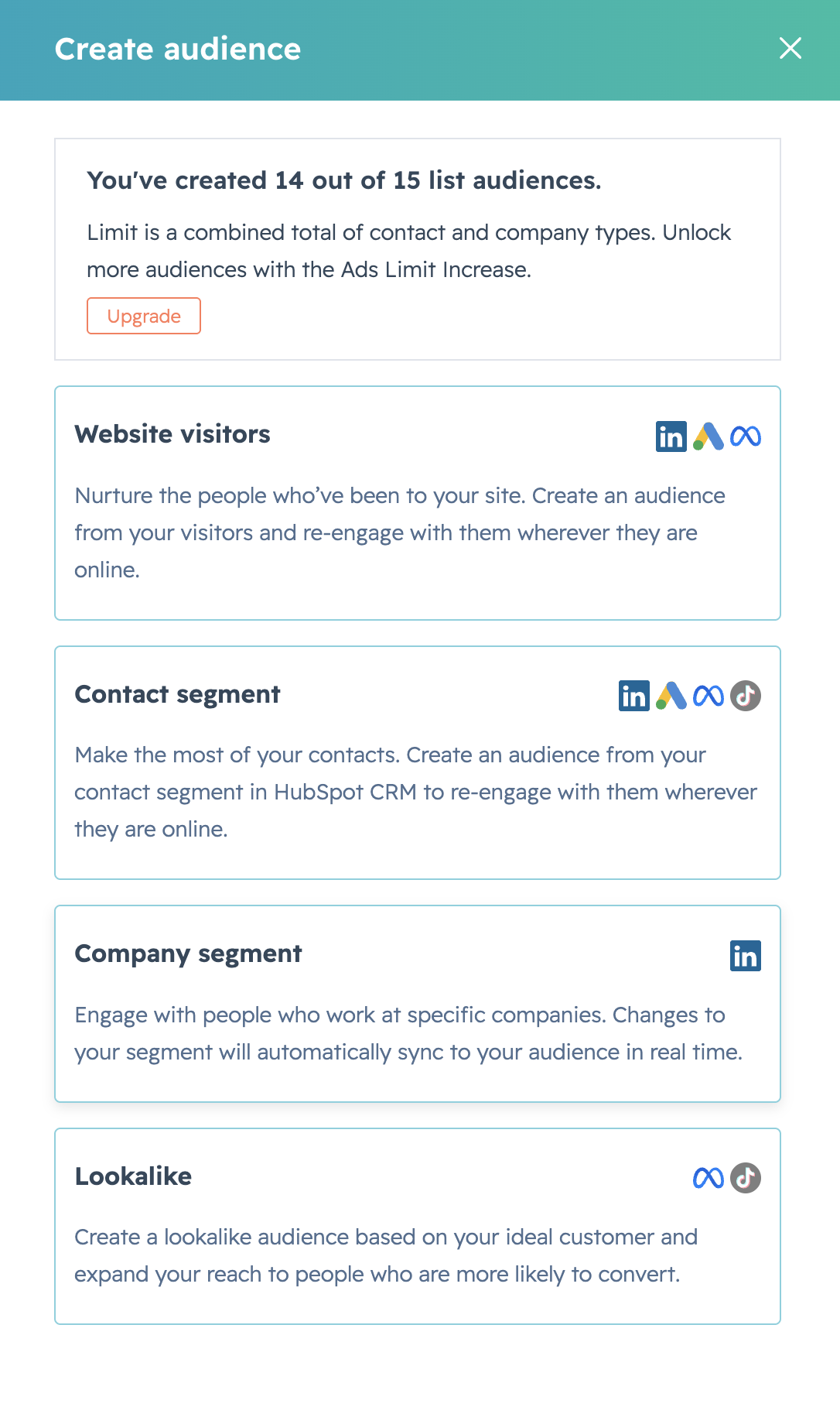
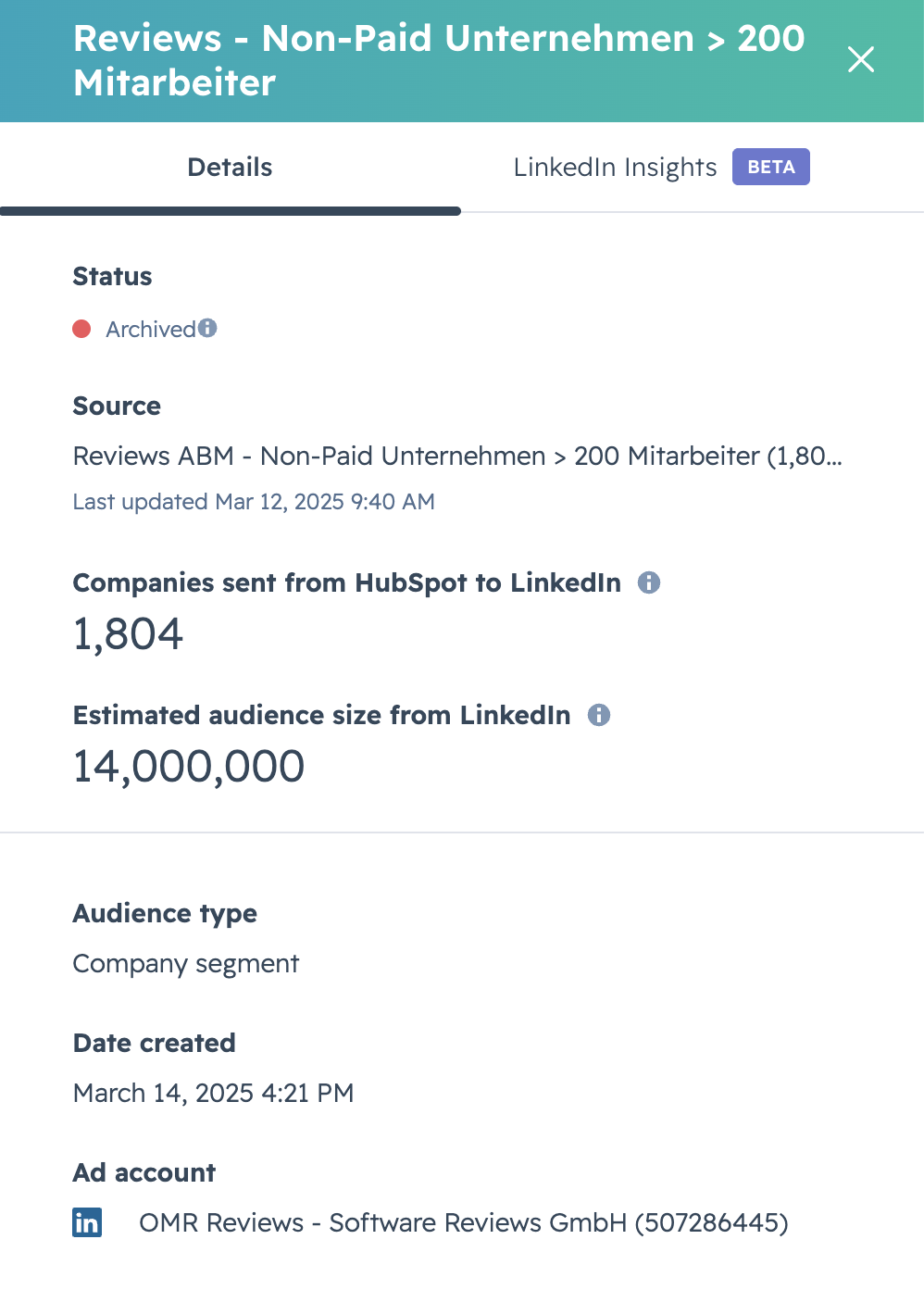
Select the segment you want to use for your campaign and choose your LinkedIn account as the advertising platform. Give your audience a name and click Save.
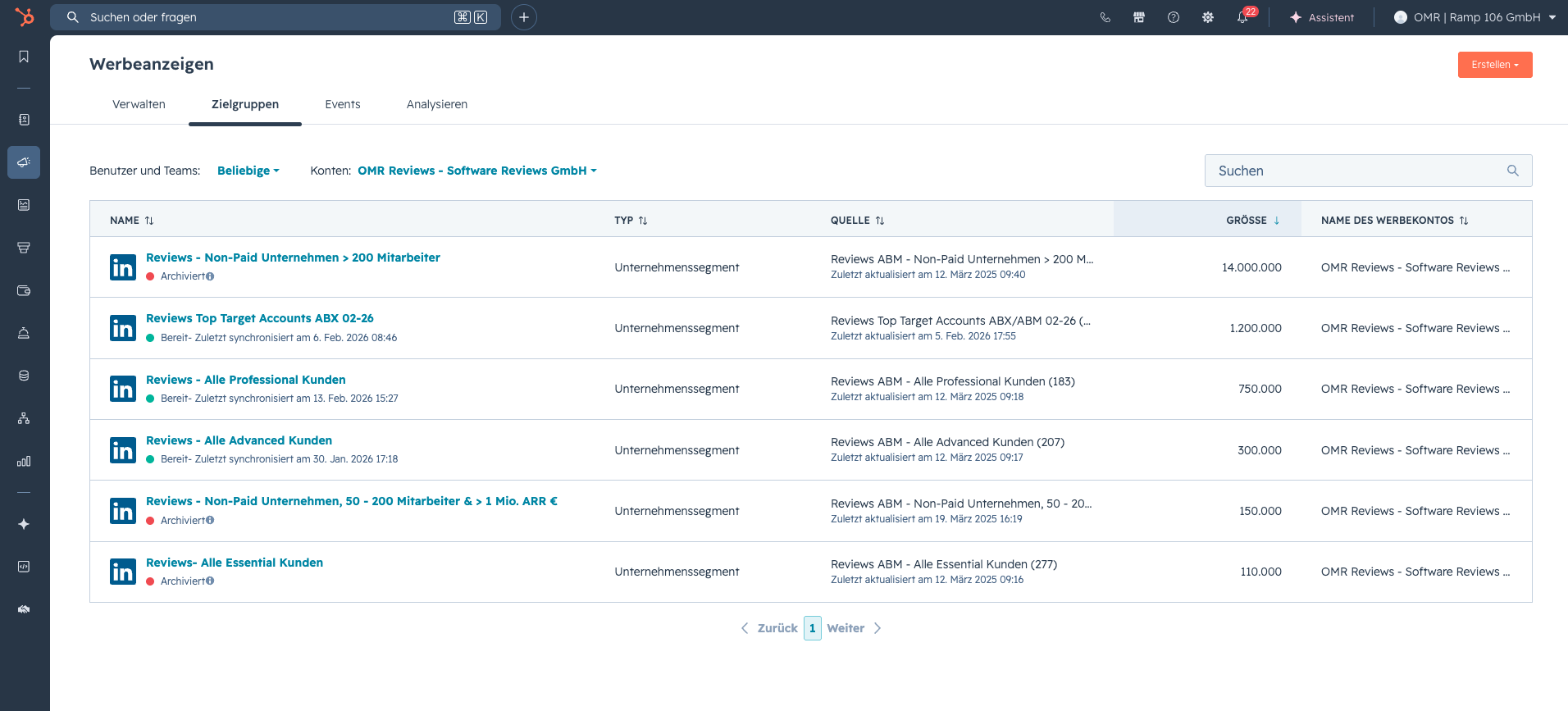
LinkedIn Campaign Manager > Audiences: uploaded account list from Clay after successful match.
Step 4: Wait for the sync
HubSpot sends hashed identifiers (email, domain, company name) to LinkedIn. LinkedIn matches them and builds the matched audience. Wait time: up to 24 to 48 hours. After that, the audience appears in the LinkedIn Campaign Manager under Plan > Audiences > Matched tab.
Which fields are transferred:
- For contact audiences: First name, last name, phone number, email.
- For company audiences: Company name, domain, industry.
The audience updates automatically whenever the HubSpot list changes.
Option B: Uploading directly in the LinkedIn Campaign Manager
If you're not going through HubSpot (for example because you've prepared your data in Clay and aren't sending it to your CRM), you upload the list directly to LinkedIn.
Step 1: Download the template
In the Campaign Manager, click Plan > Audiences on the left. Make sure the Matched tab at the top is active, then click Create audience.
Select Company / Contact, click Next. Under List type, choose either Company list (for account-based) or Contact list. Download the appropriate CSV template via the "Download a template" link.
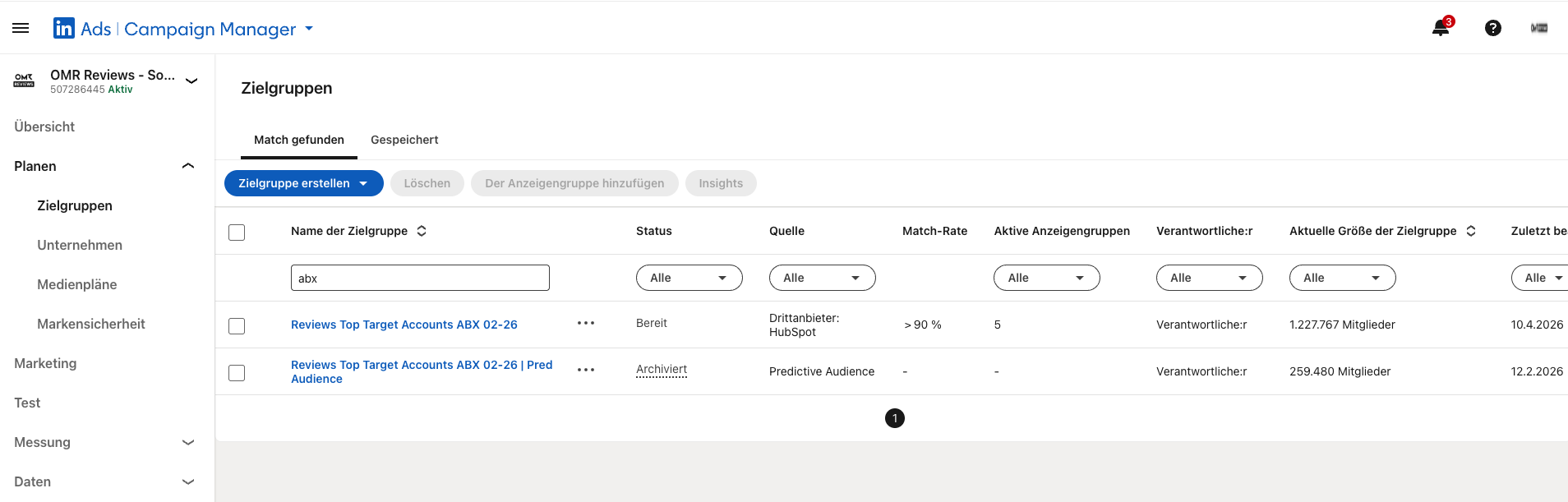
HubSpot Ads > Audiences: synced lists for LinkedIn ABM.
Step 2: Fill the CSV with OMRviewer data
Important: Don't change the header row of the template, or the upload will fail.
For a Company List, these are the helpful columns:
companyname(required)companywebsite(significantly improves match rate)linkedincompanypageurl(improves match rate to 90+ percent)companyemaildomains,industry,country(optional, refines targeting)
For a Contact List:
email(required, business email delivers much higher match rates than personal)firstname,lastname,companyname,title,country(optional)
When you export columns from Clay, use exactly these names and your import will be conflict-free.
Step 3: Upload your list
Back in the Campaign Manager: Name your audience, select list type, click Select list, upload the finished CSV from your computer, confirm "Accept & Upload".
Requirements LinkedIn checks internally:
- At least 300 rows in the list.
- At least 300 LinkedIn members must match before the audience is usable for a campaign.
- Maximum size: 20 MB or 300,000 entries.
Step 4: Wait for processing
LinkedIn matches the entries against its member pool. Wait time: up to 48 hours, occasionally longer. You'll find the finished audience afterward under Plan > Audiences > Matched tab.
Match rates you can realistically expect:
- Account lists with domain and LinkedIn page URL: 90 to 98 percent.
- Account lists with company name only: 70 to 80 percent.
- Contact lists with business emails: 70 to 85 percent.
- Mixed contact lists with personal emails: 40 to 70 percent.
Tip: Combine account list and contact list in two separate audiences. The account list covers breadth, the contact list zeroes in on specific buying committee members.
Setting up your campaign in LinkedIn and deploying your audience
Whether through Option A or B, once your audience shows as ready in the Matched tab, you can use it for a campaign.
Step 1: Create a new campaign
In the LinkedIn Campaign Manager, click Campaigns > Create campaign. Choose the objective that fits your offer:
- Lead Generation: for demo requests or content downloads with native lead gen form.
- Website Conversions: when you want the lead to convert on your own landing page.
- Brand Awareness: for pure reach in an early audience warmup phase.
Step 2: Select your audience
In the Who is your target audience? section, click Audiences > Matched audiences and select the list you just created.
If needed, you can add additional targeting layers:
- Job Function and Seniority filters to target buying committee members (typically manager level and above in relevant functions).
- Job Title for very tight targeting on specific roles.
- Don't filter too narrowly: fewer than 50,000 remaining members in your filtered audience often lead to high CPMs.
Step 3: Format, budget, and bidding
Select a format (single image, document, video, or conversation ad). Set a daily or total budget. Bidding strategy: standard is "Maximum Delivery", but for ABM campaigns often better is "Manual Bidding" with your own CPC cap.
Step 4: Add creatives
Create at least three creative variations per campaign. LinkedIn rotates them and preferentially delivers the better-performing ones. Which formats work for this workflow is covered in the next section.
Step 5: Set frequency cap
Before launch, configure the frequency cap under Optimization & Delivery. Recommendation: 3 to 4 impressions per member per week (details below).
Step 6: Launch
Activate the campaign. First delivery typically starts within 24 hours.
Which creative formats work
The content of your ads determines whether someone clicks or scrolls on. Three formats have proven effective for ABM audiences with OMR Reviews intent data.
Download offers (reports, guides, whitepapers)
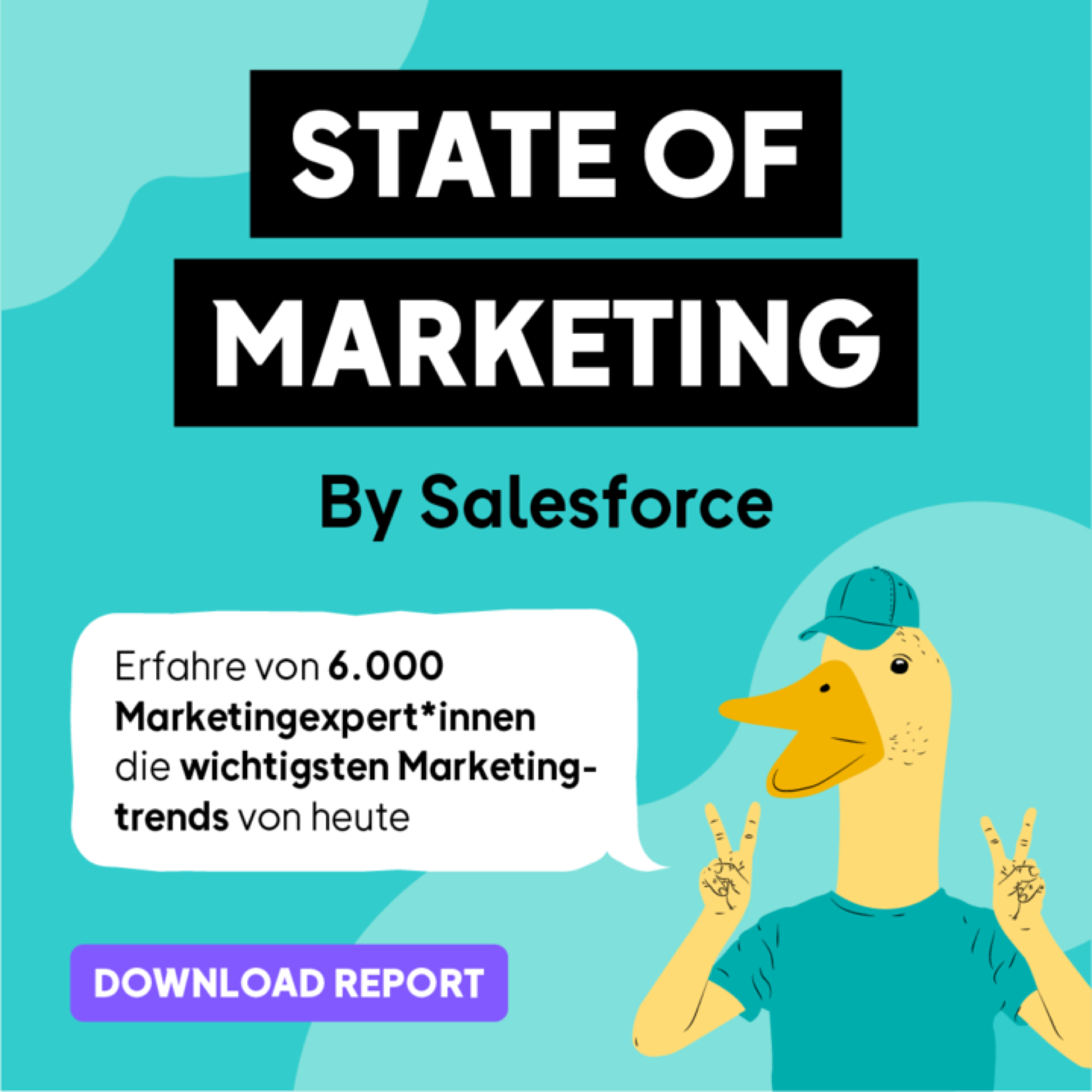
A concrete free offer works as an entry point. Examples: state-of-marketing report, marketing automation guide, comparison guide ("Why you should choose X over Y"). The offer needs real value, not a hidden sales pitch.
Example: Report download ad with clear value:
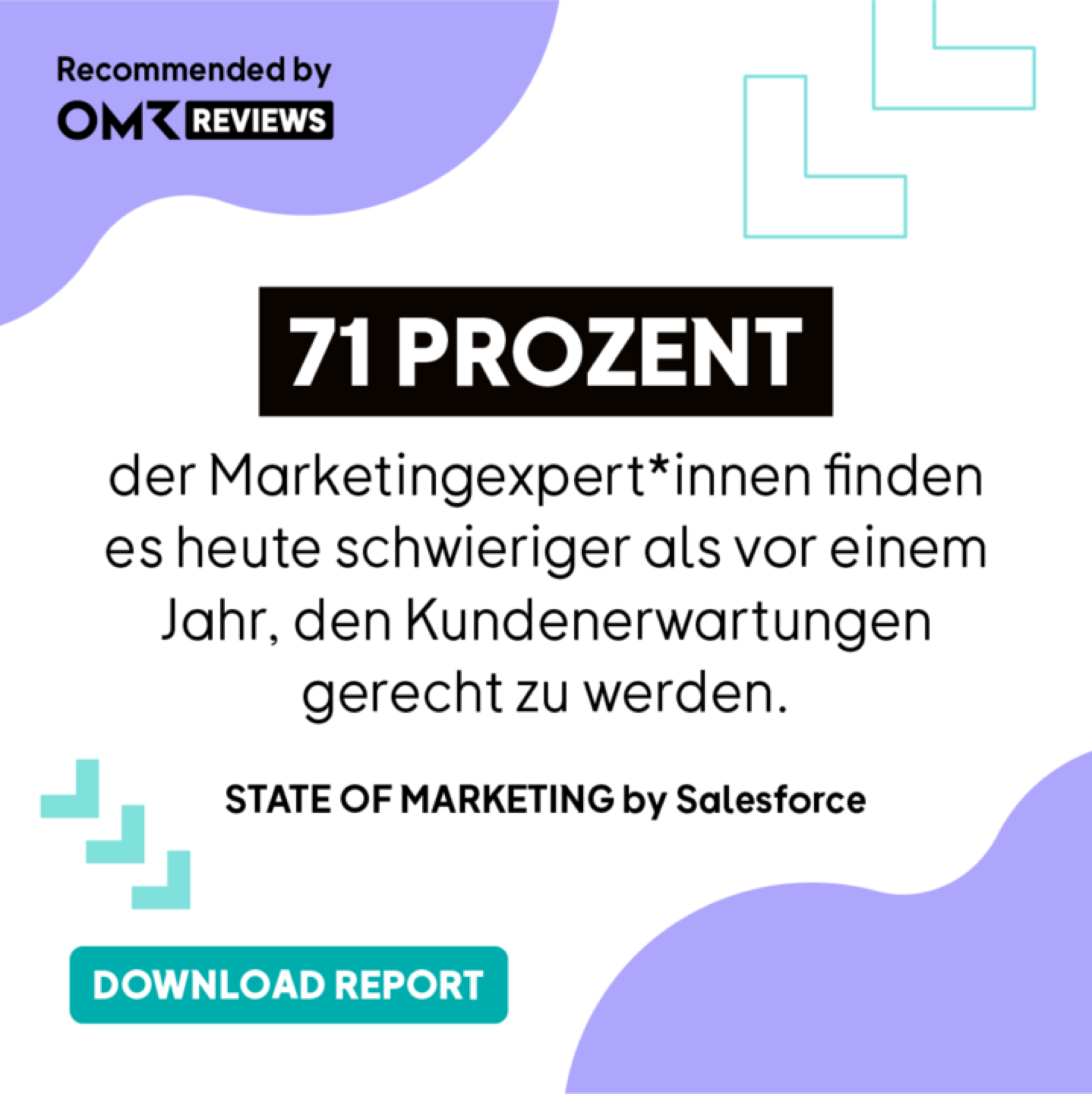
Example: Stats-driven ad highlighting a single data point prominently:
Review-based ads with social proof
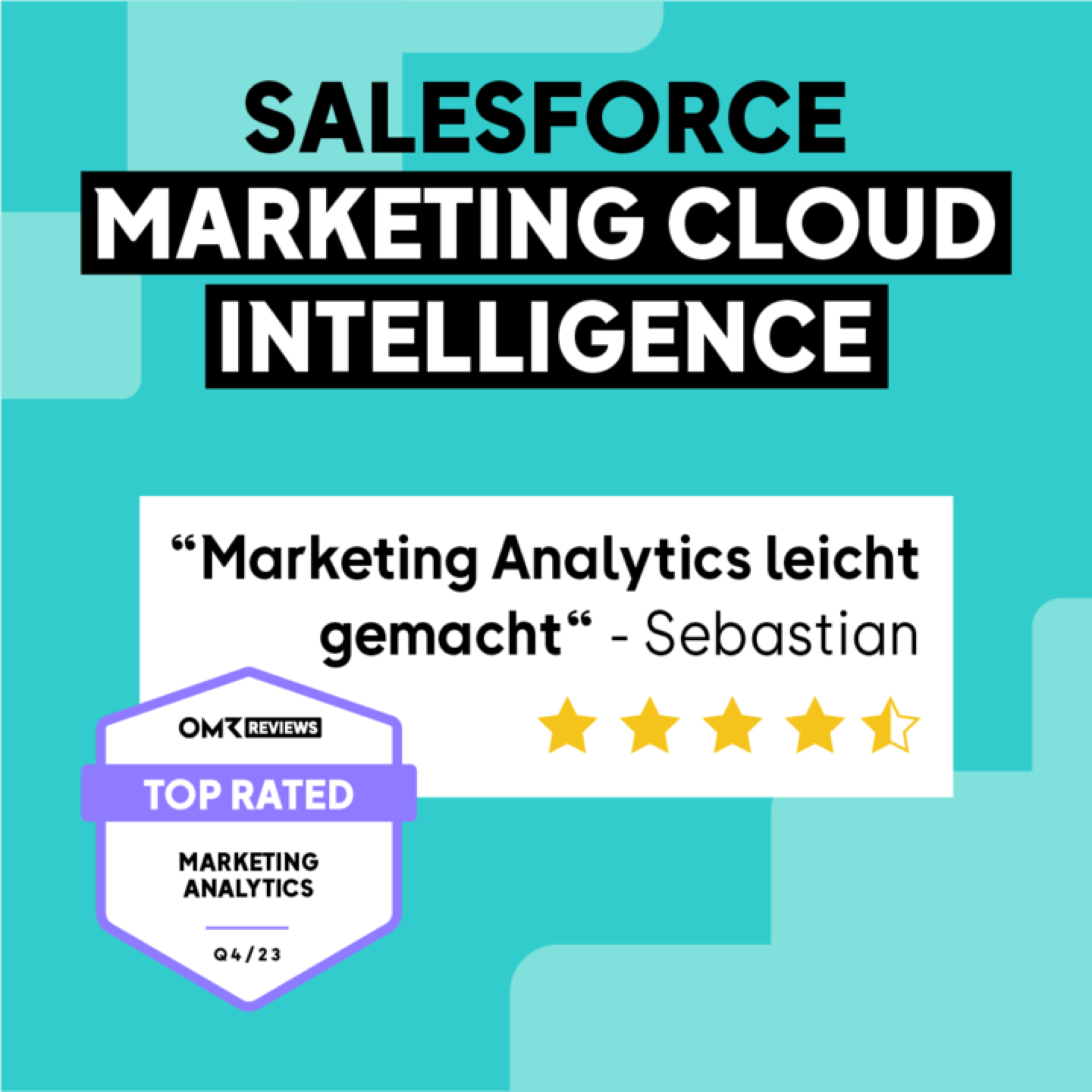
Use your OMR Reviews ratings and badges directly in your creatives. Real customer quotes, star ratings, and OMR badges ("Leader", "Top Rated", "Used by OMR") build credibility, especially with audiences actively evaluating in the market.
Example: Testimonial ad with OMR Top-Rated badge:
Webinar and event invitations
If you're offering a webinar or live event, that's a strong mechanic: low commitment for prospects, high information value for you.
Avoid direct sales messages in your first touch. Your audience has signaled interest but hasn't made a purchase decision. Deliver value first, make your offer later.
Frequency capping: what you can actually control
Without frequency capping, 80 percent of your budget lands with 20 percent of accounts, because LinkedIn's algorithm prefers to deliver to people already engaging with your ads.
Since 2025, LinkedIn allows native frequency capping in brand awareness campaigns. Recommendation: 3 to 4 impressions per person per week. Over 6 impressions per week typically triggers ad fatigue.
Important limitation: LinkedIn's native capping works at the member level, not the company level. In a 5,000-person account, your budget can still land disproportionately with a few power users. For true company-level capping, you need third-party tools like Factors.ai or comparable ABM platforms.
For ABM campaigns with OMRviewer audiences, a reasonable heuristic: 40 to 100 impressions per buying committee member per month during the consideration phase, 100 to 120 during the active intent phase.
Landing page best practices
Your campaign brings traffic, your landing page determines whether it becomes a lead. Don't send people to your homepage. Dedicated landing pages convert at around 13 percent in B2B, homepages at 2 to 3 percent. A factor of 4 to 6.
What works on high-converting landing pages for software providers:
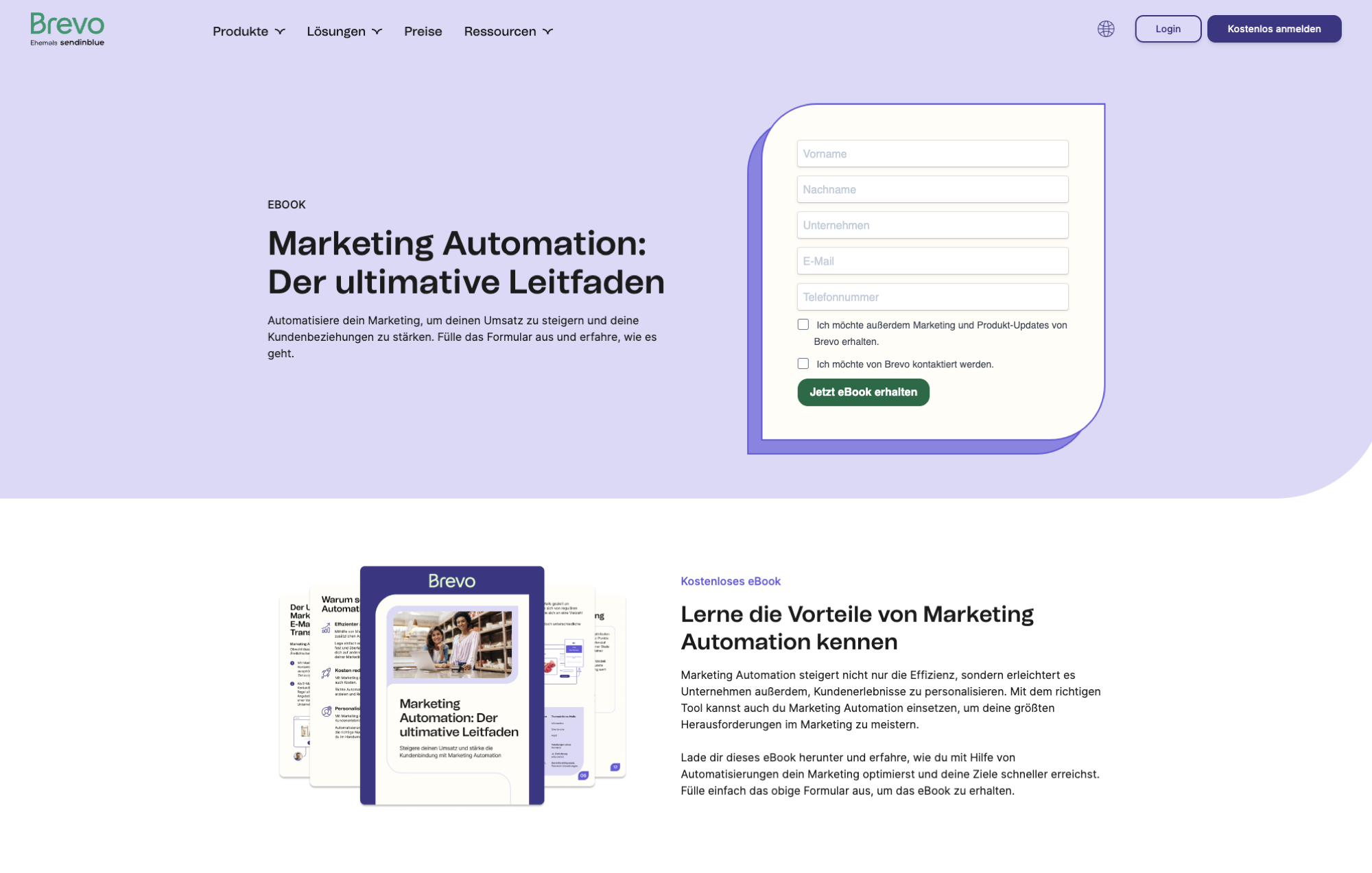
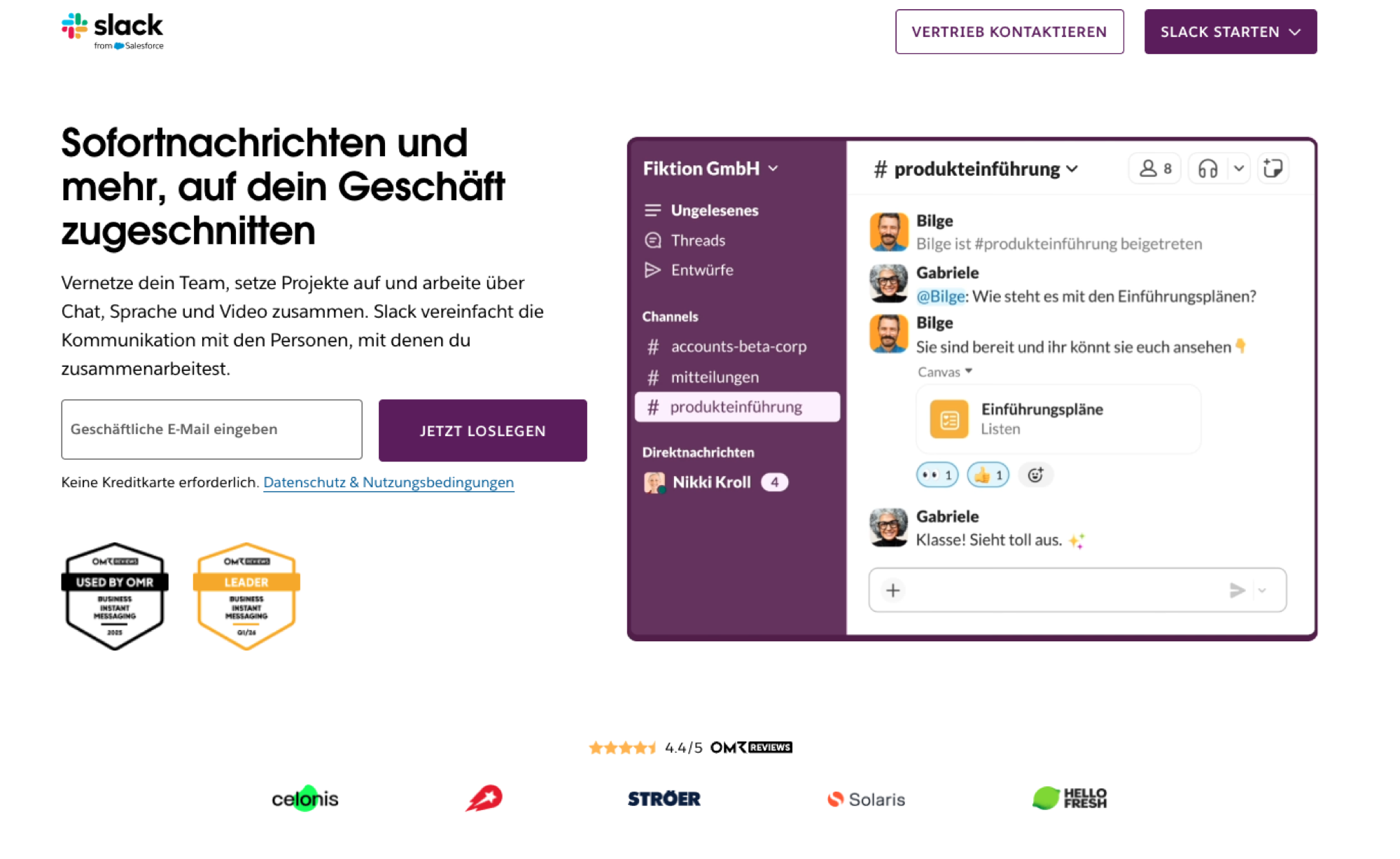
Prominently feature OMR badges. Badges like "Leader", "Top Rated", or "Used by OMR" are trust signals that work directly with DACH audiences. Place them in visible areas, not in the footer. Slack, moinAI, and Brevo demonstrate this well: badges right next to the main CTA or under the headline.
Slack landing page: OMR "Used by OMR" and "Leader" badges right next to the CTA.
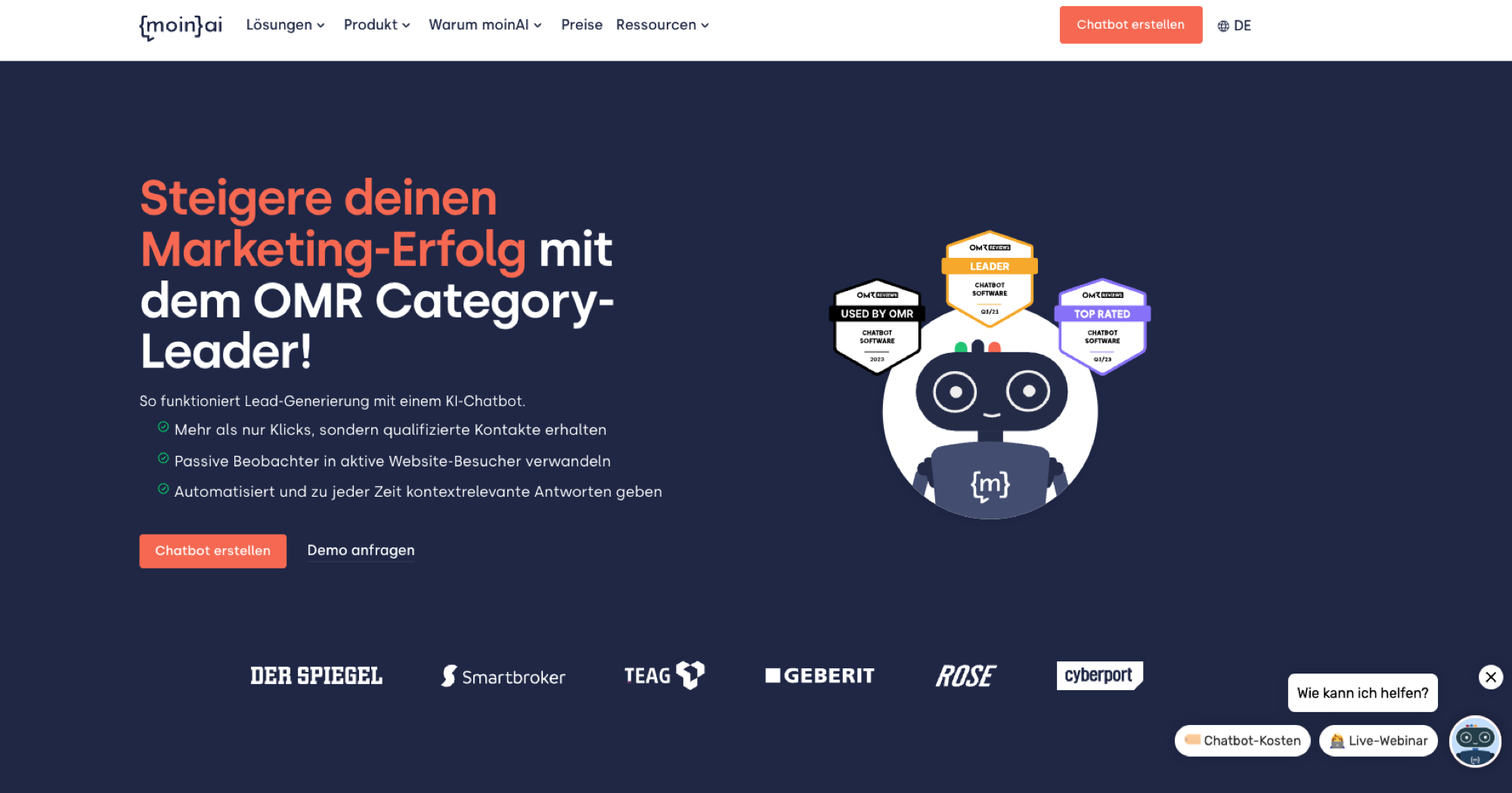
moinAI features multiple OMR badges prominently in the hero section.
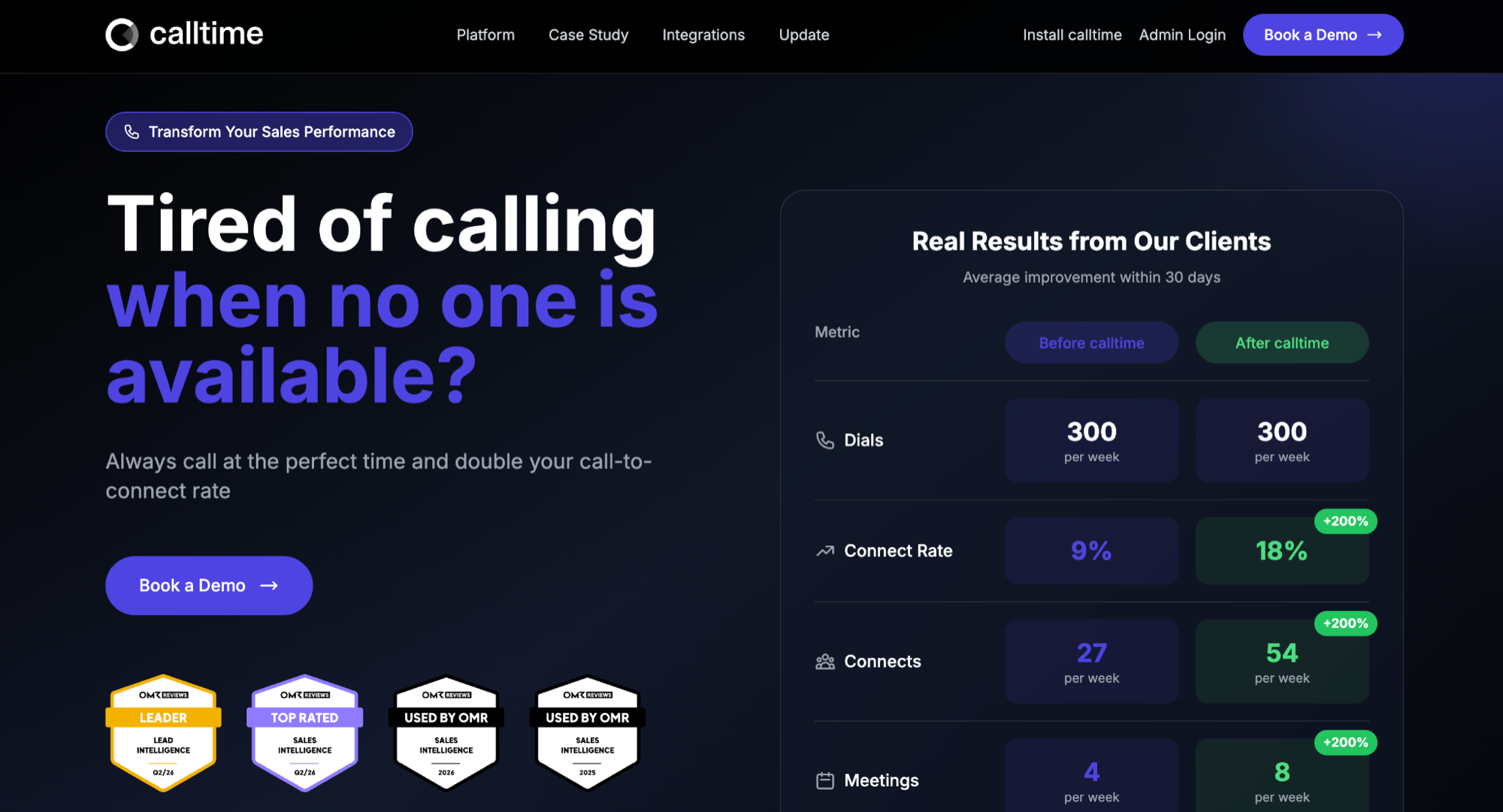
Calltime combines four OMR badges right under the main CTA.
Clear CTA with low entry commitment. "Request a demo" is often too much in an early phase. "Download guide", "Secure your webinar spot", or "Get your free guide" convert better because they require less effort than a conversation.
Brevo: dedicated landing page with lead magnet and lead form above the fold.
Social proof through customer testimonials and logos. Real reviews, quotes, and company logos provide direction. Your OMR Reviews ratings are directly usable.
Headline matching your ad offer. If someone clicked on "Marketing Automation Guide", that needs to be at the top of your landing page. No generic product description.
👉 Learn more about "Best Practice: LinkedIn Outreach"
What this workflow actually delivers
A CRM technology provider generated 249 leads using exactly this approach, leveraging OMR Reviews buyer intent data as the foundation for LinkedIn ABM. Their CPL came in 50 percent below the LinkedIn B2B benchmark of 100 to 150 euros per lead. This wasn't due to budget, but the quality of the audience.
For this workflow to work for you the same way, you need three things:
- Data quality in your audience. Account lists with domain and LinkedIn page URL match significantly better on LinkedIn than pure contact lists or company name lists.
- Creative that fits the phase. Intent audiences are in early evaluation, not sales mode. Value propositions before demo requests.
- Dedicated landing page. A factor of 4 to 6 difference in conversion rate compared to your homepage.
Want to set up this workflow? Reach out to your Customer Success Manager. They'll help you find the right integration path for your package and set up the API key.
👉 Learn more about "Integrating OMRviewer Data into Your Tool Stack"
 Powered by happysupport.ai