
Leveraging Buyer-Intent Data in HubSpot
Connect buyer-intent data from OMR Reviews to HubSpot using CRM integration to automatically identify and qualify companies searching for your solution
Pixx.io shares insights on how they integrated buyer-intent data from OMR Reviews into HubSpot and generated measurable pipeline impact
When someone buys software, they research online first on platforms like OMR Reviews. The seemingly anonymous clicks get decoded by OMR Reviews and enriched with additional information. This turns what looks like a meaningless profile visit into a clear signal showing which company is looking for answers and what topics interest them.
For SaaS teams, these signals are incredibly valuable: they show which companies are actively searching for a software solution. In reality, however, these so-called buyer-intent data often go unused. The reasons are straightforward: missing processes, lack of time, or not knowing how the data can help in your daily work.
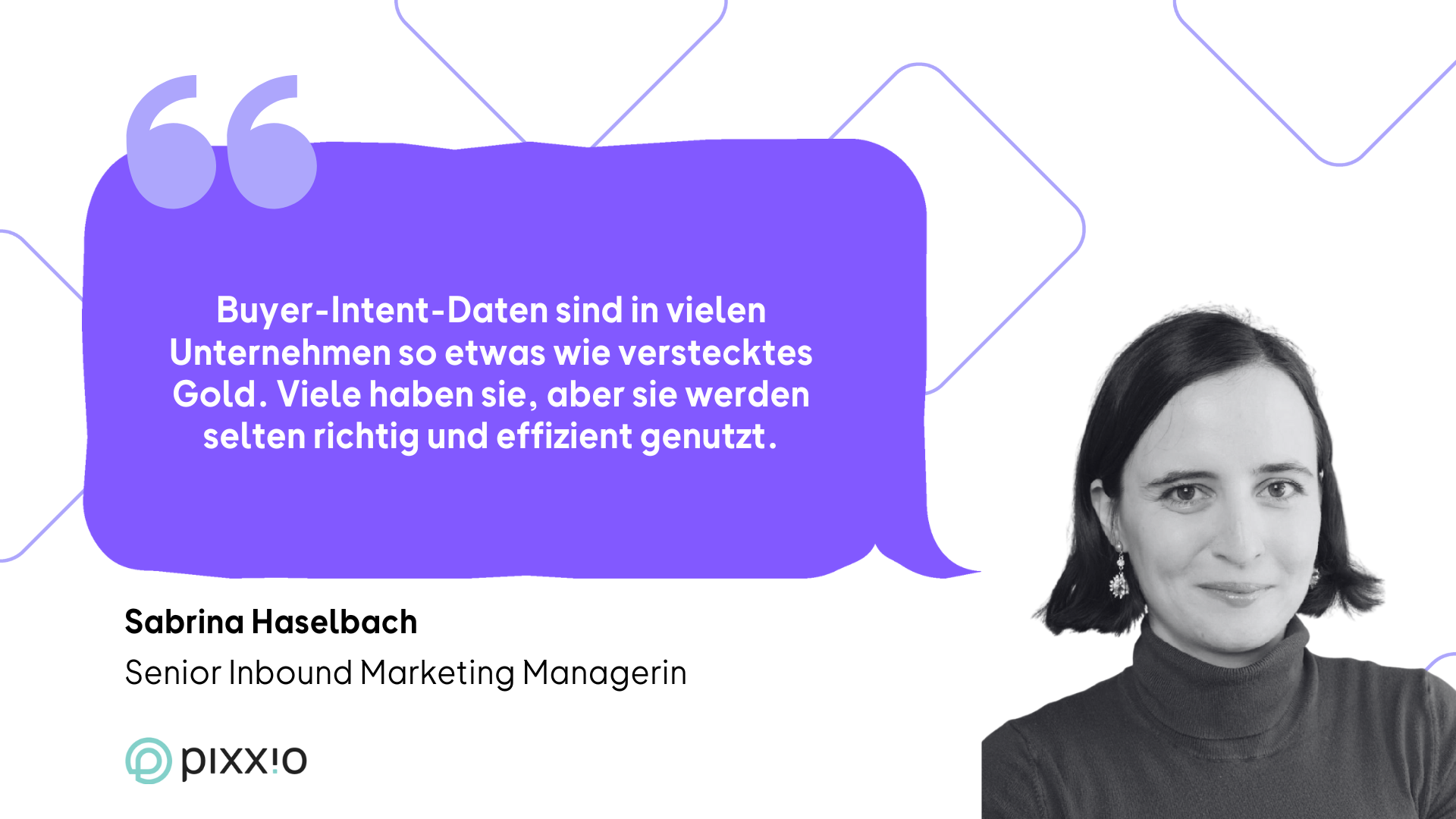
Sabrina Haselbach, Senior Inbound Marketing Manager at pixx.io, shares concrete steps in this best-practice article on how you can set up an efficient process for buyer-intent data using automation.
Step 1: Integrate intent data into your CRM
The first step is connecting intent data from OMR Reviews with your CRM system (for example, HubSpot). The goal is to automatically capture relevant signals:
-
Define an intent score above which a company is considered relevant (e.g., >30).
-
Check which pages were visited to understand the company's interests.
-
Automate the data transfer so qualified companies automatically appear in your CRM without you having to manually update lists.
👉 You'll find detailed instructions here on how to set up a CRM integration.
"For our SDR colleagues, the automation really saves a lot of time, and we're already seeing results: compared to last year, we opened 210% more deals where OMR was a touchpoint." - Sabrina Haselbach from pixx.io
Step 2: Set up notifications for your team
So your sales team can react immediately, it's worth bringing relevant data into communication tools (like Slack):
-
Set up a dedicated channel for qualified leads.
-
Automate notifications as soon as a company reaches your defined intent score.
-
This way, SDRs get immediate attention for new, relevant leads and don't need to search through spreadsheets or databases.
Step 3: Prioritize and verify leads
Not every interaction is equally valuable. A streamlined verification process ensures your team works efficiently:
-
SDRs review the top 5 URLs for qualified leads.
-
Match leads against existing CRM contacts:
-
Existing contact: Direct outreach is possible.
-
New contact: Start research on LinkedIn or other sources.
-
-
This turns a large data block into a clear, prioritized pipeline.
Step 4: Involve Customer Success early
Intent data isn't just relevant for new customers - it also has benefits for existing ones:
-
Set up automation that checks if a customer is searching for alternatives on OMR Reviews.
-
If a customer actively visits competitor profiles, your CS team can react proactively before they switch.
-
Use the data as an early warning system to increase retention and customer loyalty.
Step 5: Start lean, optimize steadily
Many teams wait for the perfect process, but a lean start delivers results quickly:
-
Start with clear thresholds and a minimal setup.
-
Bring the data to where it matters: your CRM, Slack, or other collaboration tools.
-
Work closely with sales and adjust workflows as needed.
-
Monitor results, optimize, and expand the process step by step.
"My tip is not to put off the HubSpot integration. With manual analysis of buyer-intent data, you lose a lot of time, and automation makes the process more efficient and accurate. We didn't think at first that it would have this much impact." - Sabrina Haselbach from pixx.io
🚀 Checklist for your team:
-
Work closely with sales before building workflows.
-
Start with clear thresholds like an intent score above 30.
-
Bring the data where it matters: into your CRM system and communication tools like Slack.
-
Use intent data not just for new customers, but also in Customer Success.
-
Don't wait for the perfect process - a lean start often delivers the biggest impact.
Have more questions? You'll find more information about buyer-intent data on OMR Reviews.
 Powered by happysupport.ai